
Wireless Slot Car Control
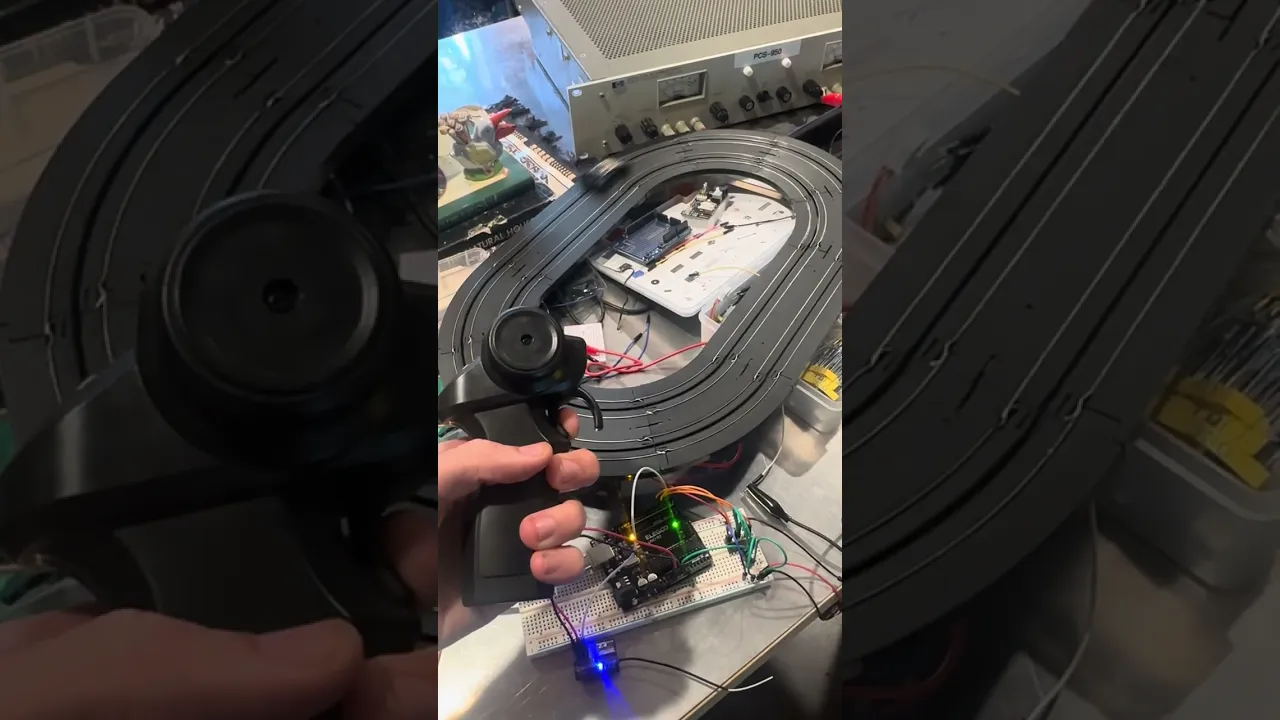
Wireless HO scale slot car controller Powered by Arduino — adjustable settings, under $50 in components.
Tools & Skills Used
Arduino, PWM Signal Processing, DC Motor Control, RC Hardware, Embedded Programming
Slot car controllers have been basically the same for 60 years — a resistor on a trigger. I wanted something better.
The system uses two standard RC car transmitters, one per lane. The trigger controls throttle the way you'd expect, but the steering wheel channel — normally wasted in a slot car application — gets repurposed as a live settings dial. While racing, the driver can adjust braking sensitivity, coasting duration, and throttle curve on the fly without stopping or touching any hardware. It's a level of tunability that doesn't exist in any commercial slot car controller.
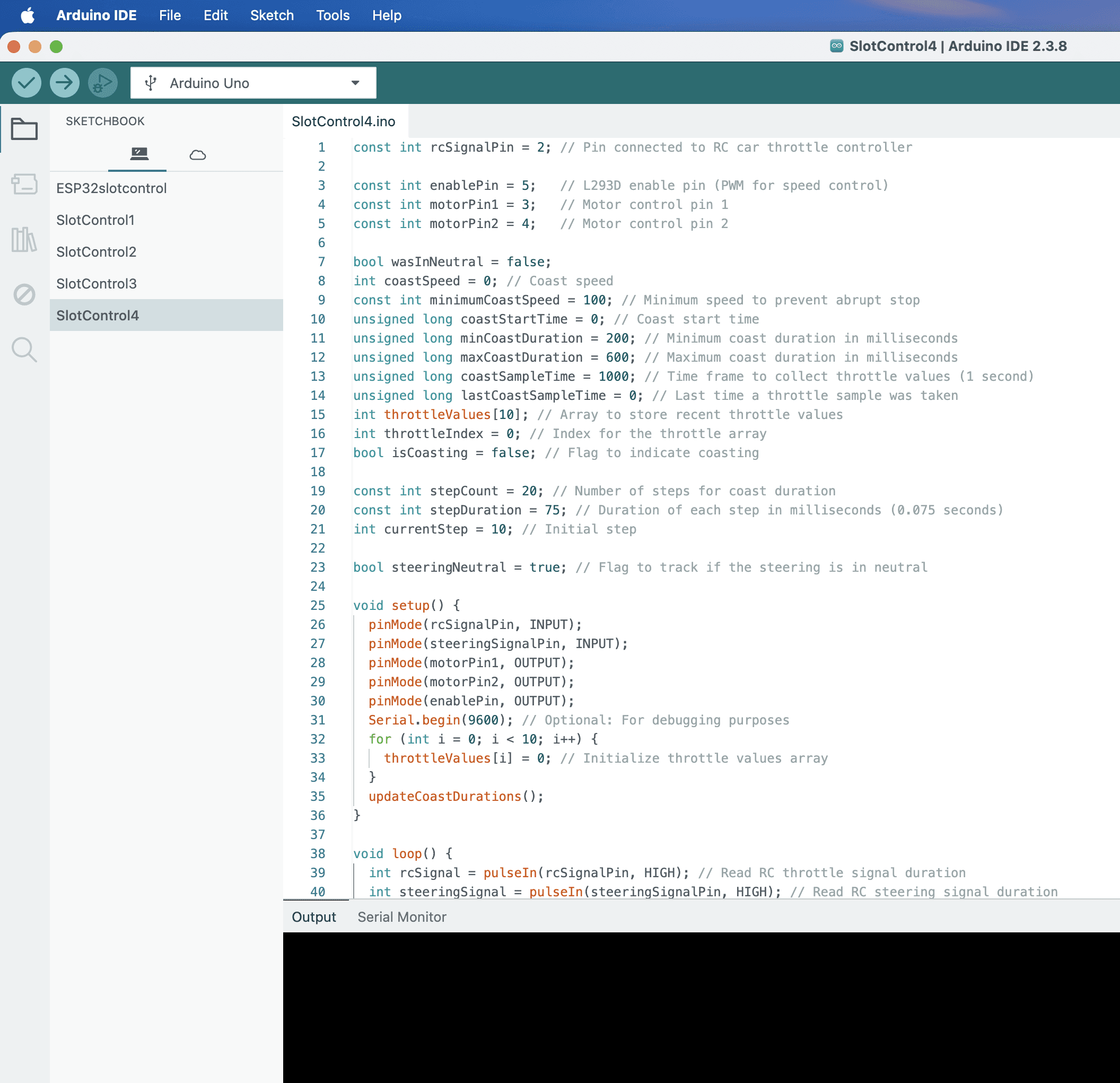
Under the hood, an Arduino Uno reads the incoming PWM signals from both RC receivers simultaneously, processes them, and outputs control signals to a dual DC motor driver that powers the cars on the track. The processing layer is where the interesting work happens — the Arduino isn't just passing signal through, it's interpreting it, applying the driver's current settings, and translating everything into precise PWM output. You can program active braking, extended coasting, throttle curve and response. A real system that you can dial in to any specific car or track, and the whole system is wireless.
It runs two lanes independently from a single Arduino, with each driver controlling their own car and their own settings from their own transmitter — no shared hardware, no interference.
Tunable commercial controllers do exist for larger 1/32 and 1/24 scale cars — but they run close to $100 each and are still resistance-based. This entire system came in under $50 in components. The next step is digital car control at HO scale — something that exists for larger formats but hasn't been done at 1/64. The goal is unique car addressing so multiple cars can share a single lane, each responding only to their own transmitter, as well as saved memory to recall settings for different cars.
Update Log: